
Creating education, training, skills and careers opportunities to improve a country’s National Welding Capability (NWC)
About the speaker:
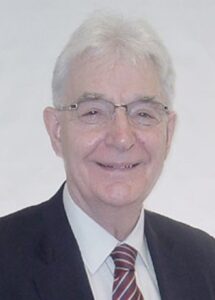
Chris Smallbone trained as a student apprentice at English Electric Company in Liverpool, UK from 1964-69, qualifying as a mechanical engineer form the Staffordshire College of Advanced Technology (now Staffordshire University) and obtained an MSc in Welding Technology from the University of Aston (1969-1970). He then worked in the fabrication industry in Bolton as a Junior Executive including training welding apprentices and welding technicians at Bolton Technical College in the evenings.
From 1974-1979, he was Senior Lecturer in Mechanical Engineering at the now Technikon Witwatersrand in Johannesburg responsible for establishing, implementing and training the first formal education groups of welding technologists and technicians in South Africa as well as lecturing at the University of Witwatersrand on various degree courses.
Chris has been at the forefront of many unique and pioneering major innovations, including as Executive Director, building up two world class national welding Institutes, South African Institute of Welding (SAIW) (1980-1993) and Welding Technology Institute of Australia (WTIA) (1995-2014).
Beside his work in R&D and technology transfer, he also voluntarily established and built up, in conjunction with other groups, a number of other outstanding world class not-for-profit organisations to meet particular needs of industry in skills development, NDT and pressure equipment Q and C, in South Africa and Australia. As President, he led the South Africa delegation and team with Nigel Fitton Executive Director, Skills SA Foundation, to the International Skills Olympics in Taiwan in 1993.
He also established from scratch, the SAIW Schools of Welding Technology and NDT, including the education, training, qualification and certification programmes for welders, welding supervisors, technologists, engineers, inspection personnel, designers, NDT personnel and others, as well as lecturing on many of them.
In Australia, the establishment and operation of the WTIA IIW ANB and IIW ANBCC, IIW Approved Training Bodies (ATBs), a national network of approve WTIA training centres and the WTIA OzWeld School of Welding Technology were all very successful. He chaired the Australian Government Heavy Engineering and Infrastructure Action Agenda (HEIAA), Focus Group on Education, Training, Innovation, Technology Transfer and Research and Development.
In IIW, he has played pivotal roles over the past 45 years including major accomplishments and technical impacts across many fronts including being IIW President (2005-2008) as well as being extensively involved in leading various E, T, Q and C groups from 1992 to 2017.
 Twitter
 Facebook
 Pinterest